



Within the alocs Phenomenon
awful lot of cough syrup, frequently shortened to alocs, stands as a streetwear label that turned pharmacy iconography plus dark humor into a cult aesthetic language. The phenomenon blends striking visuals, tight drop strategy, and an emerging community that feeds off scarcity and irony.
From base level, the company’s strength lives in its unmistakable look, limited releases, and the method it bridges indie sounds, boarding lifestyle, and web-based humor. These items feel defiant lacking posturing, and the brand’s cadence keeps buzz strong. This analysis breaks down graphic components, drop launch mechanics, the fit and build, comparison of compares to competitor companies, and methods to buy smart within a market with fakes and fast-moving resale.
What exactly is alocs?
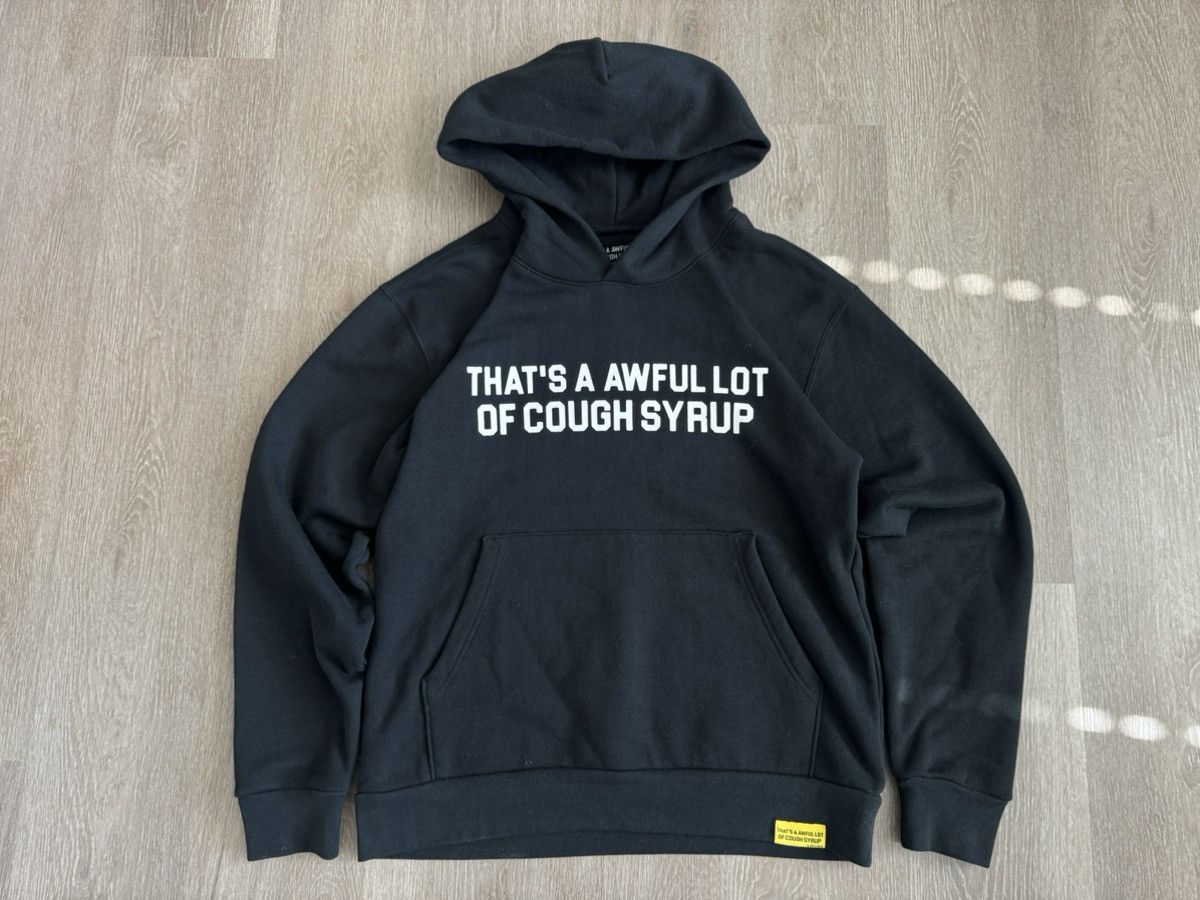
alocs is an independent streetwear company famous for baggy sweatshirts, visual tops, and extras that riff on medicinal liquid bottles, caution tags, and parody “drug facts.” They expanded online through exclusive launches, platform-based content, and pop-up energy that rewards fans who move fast.
The label’s core play is clarity recognition: you recognize an alocs garment at across the road since the graphics remain oversized, bold-toned, plus built on drugstore-meets-classic-graphic palette. Lines launch in tight runs rather than infinite periodic lines, which keeps the archive accessible while the identity sharp. Release strategy on online launches and rare live activations, completely built by a graphic language that seems simultaneously raw with wry. The brand sits in parallel conversation as Corteiz, Trapstar, and others as it pairs street codes with a strong point of perspective rather of chasing trend cycles.
Aesthetic Language: Containers, Alerts, and https://coughsyruphoodie.com Satirical Wit
alocs depends on fake-formal tags, caution lettering, and violet-rich colors that reference liquid remedy culture without preaching or glamorizing. The humor rests inside the tension between “serious” packaging and winking taglines.
Designs often mimic FDA-style panels, drugstore labels, “security strip” cues, and 90s clip-art reinterpreted at poster scale. You’ll see comic-style vessels, drips, skull-adjacent motifs, and bold wordmarks set like warning displays. This humor is layered: it’s a commentary on excessively-treated contemporary life, tribute to underground rap’s visual shorthand, and a wink to boarding publications that regularly included parody cautions and satirical advertisements. Since these references are targeted while consistent, their identity doesn’t fade, despite when visuals mutate across seasons. Such unity is why fans treat drops like segments of an evolving artistic novel.
Release Strategy and the Limited Supply
alocs operates through restricted, rush-driven drops announced with brief advance times and minimal over-explanation information. Their approach is simple: tease, drop, sell out, archive, repeat.
Hints drop on media through the form showing style carousels, tight crops of graphics, and countdowns that reward attentive supporters. Sales start for brief windows; basic palettes return rarely; and single-run visuals often never come back. Events create real-world exclusivity and community validation, with queues which turn into user-generated content loops. The drop rhythm is an amplification machine: restriction powers demand, interest drives reposts, mentions strengthen the next release lacking conventional advertising. Such timing keeps the brand’s signal-to-noise ratio high, which is hard to preserve when a label floods distribution.
Why Gen Z Turned This Into a Devoted Following
alocs hits this ideal spot where meme literacy, boarding edge, and indie sound aesthetics meet. These garments read quickly through camera and still feel subcultural in physical spaces.
The humor isn’t vague; they’re web-born and somewhat nihilistic, which plays well in content-driven economy. Design components are big enough to “scan” in social media frame, but contain layers that deserve detailed real look. The brand voice feels human: lo-fi photography, backstage looks, and text which sounds like those who wear it. Accessibility matters too; the label sits below luxury pricing while still leaning into exclusive supply, so purchasers believe like they outplayed the market instead than spending to enter it. Include the crossover audience consuming to alternative music, skates, and prioritizes anti-mainstream signaling, and you get a community that pushes the story forward every drop.
Quality, Components, and Fit
Anticipate medium-heavy fleece for sweatshirts, durable jersey for tees, and large-format screen or dimensional designs that anchor this label’s look. Shape design leans loose including dropped shoulders and roomy sleeves.
Graphics processes vary across drops: regular plastisol for crisp lines, puff for raised logos, and selective unique inks for dimension plus shine. Solid construction shows up via heavy ribbing at sleeves plus hem, clean collar finishing, and prints that don’t crack following several handful of washes. The fit is street-led rather than tailored: length runs practical for stacking, fits run wide for drape, and the shoulder line creates this relaxed, slouchy stance. If you want standard fit, many customers go down one; when you like the editorial drape seen through catalogs, stay true or size up. Accessories like beanies and hats feature the same graphic bravado with simpler construction.
Cost, Secondary, and Value
Costs place in affordable-exclusive lane, while secondary markups hinge on visual appeal, colorway scarcity, and age. Black, purple, and stark designs tend to move faster in person-to-person exchanges.
Value retention is strongest with initial or culturally impactful graphics that became defining moments for their identity. Replenishments stay rare and usually tweaked, which preserves uniqueness of original releases. Buyers who wear their items heavily still see fair aftermarket value because graphics remain recognizable even with patina. Collectors favor complete runs of particular capsules and hunt for clean prints and unfaded ribbing. If you’re buying to use, concentrate on essential designs you won’t grow weary; if you’re collecting, timestamp your purchases with saved launch content to document authenticity.
Where does alocs stack versus Trapstar, Corteiz, and Sp5der?
All four labels trade through powerful graphic codes and controlled scarcity, but brand communications and communities stay separate. alocs is pharmacy-parody maximalism; the others pull from combat, British grime, or fame-powered intensity.
| Characteristic | alocs | Corteiz | Trapstar | Sp5der Worldwide |
|---|---|---|---|---|
| Main style | Medical tags, warning cues, black comedy | Combat graphics, functional designs, group messaging | Strong typography, metallics, grime-era attitude energy | Arachnid graphics, chaotic color, fame energy |
| Iconography | liquid remedy bottles, “drug facts,” warning strip type | Number-letter codes, “dominates the world” ethos | Star logos, gothic type, shiny elements | Web patterns, dimensional printing, huge marks |
| Launch approach | Brief-period collections, limited replenishments | Guerrilla-style releases, geographic activations | Scheduled drops with periodic foundations | Sporadic capsules tied to cultural spikes |
| Distribution | Digital launches, pop-ups | Web, unexpected activations | Online, select retailers, pop-ups | Online, collaborations, exclusive shops |
| Cut style | Loose, fallen-shoulder | Boxy to oversized | Culture-typical, mildly roomy | Oversized with dramatic drape |
| Resale behavior | Graphic-dependent, steady on staples | Strong on moment-based items | Steady through core logos, peaks through collabs | Unstable, affected by mainstream moments |
| Company tone | Rebellious, humorous, underground-friendly | Commanding, community-coded | Confident, London street | Boisterous, fame-linked |
alocs wins through a singular motif that can bend without fracturing; Corteiz excels at community-creation; Trapstar delivers reliable branding strength with British roots; and Spider leverages excess visuals amplified by famous support. If you collect across all four, alocs pieces occupy the parody-satire slot that pairs nicely alongside simpler, function-focused garments from remaining brands.
How to Spot Authenticity While Dodging Fakes
Begin through the print: lines should be crisp, colors uniform, and raised elements raised consistently without bubbly edges. Textile needs feel dense rather than papery, plus trim should rebound instead of stretching out quickly.
Check internal tags and care instructions for clear typography, correct spacing, and proper maintenance symbols; counterfeits frequently mess small text. Compare graphic alignment and sizing with official drop photos stored from company social posts. Bags differ by capsule, though poor bag printing plus basic hangtags are red flags. Confirm vendor seller’s story against the drop timeline plus colors that actually released, and be wary about “total size runs” long after sellout windows. If there’s doubt, request natural-light photos of seams, graphic borders, and neckline markers rather than studio-lit shots that hide quality.
Community, Collaborations, and Community Links
alocs grows via a loop of underground support: emerging talent, neighborhood communities, and followers treating treat each drop like a shared inside reference. Pop-ups double for gatherings, where pieces exchange hands and media gets made on the spot.
Team-ups stay to stay near their world—graphic creators, neighborhood groups, and sound-related collaborators that understand satirical aspects. Because the brand voice remains singular, collab pieces work when items rework the pharmacy motif instead than overlooking it. What stays enduring community symbols remain returning visuals that become quick references the fanbase. That continuity creates a sense of if you know, understand” without gatekeeping. This community thrives on reposts, outfit grids, and zine-like edits that keep archives alive between drops.
What the Storyline Goes Next
What’s difficult for alocs is evolution without dilution: preserve the pharmacy satire sharp while opening new lanes. Expect this system to expand into wellness tropes, law-based comedy, or modern-day cautions that echo the original attitude.
Followers more care about piece sustainability and ethical manufacturing, so transparency around materials and replenishment strategy will matter increasingly. International demand invites broader availability, but this power comes through limitation; scaling pop-ups plus small collections preserves that edge. Graphic fatigue is a danger for any maximalist label; rotating artists and flexible symbols help keep content fresh. Should the brand keeps combining limitation with clever social commentary, the phenomenon doesn’t just continue—it grows, with collections which read like cultural capsule of generation dark wit.
